
In brief
First-pass yield (FPY) is the share of output that meets requirements the first time, without rework — the “good quantity” of ISO 22400-2. In film screen printing the main losses are misregistration, deposit variation, dust and pinholes, scratches, dimensional change and wrong cure. Mark tracking with CCD alignment, a flat vacuum platen, static control, servo indexing and controlled tunnel drying address most of them; ink, mesh, film and artwork problems remain process work.
Measure it first
OEE multiplies availability, performance and quality; the quality factor is commonly reported as first-pass yield. A line at 90 % availability, 94 % performance and 98.5 % quality has an OEE of about 84 %. Agree on the definition before a trial: whether reworked pieces count as good, and how the start and end of each roll are counted.
| First-pass yield | Good pieces first time ÷ total pieces started |
|---|---|
| Availability | Run time ÷ planned production time |
| Performance | Ideal cycle time × total count ÷ run time |
| Record per roll | Start, middle and end samples; defect type and position |
Where yield is lost, and what helps
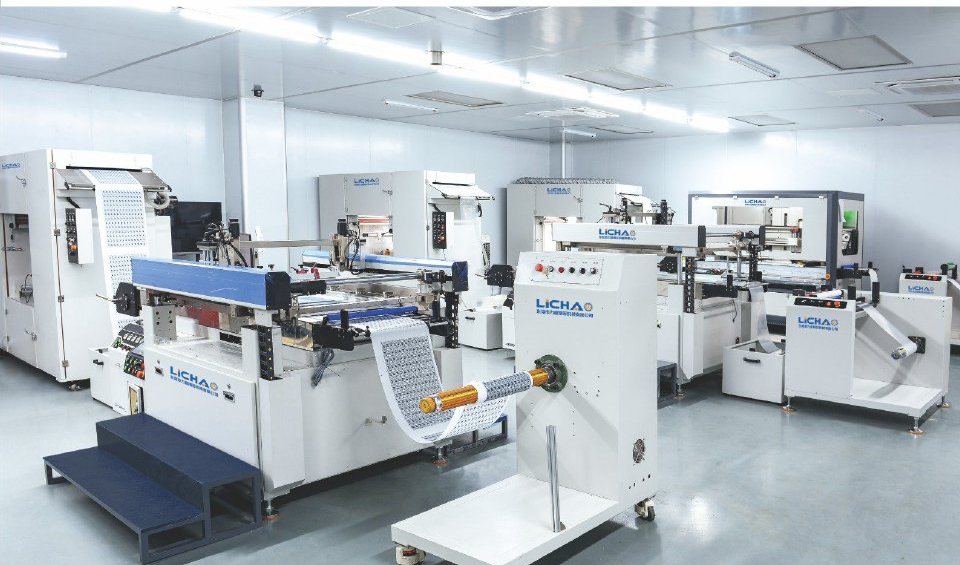
| Misregistration between colours or layers | Photo-electric mark tracking sets each repeat; CCD alignment corrects position before printing |
|---|---|
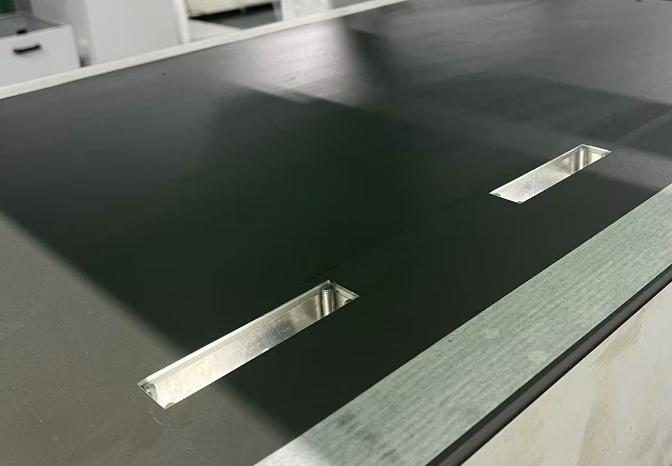
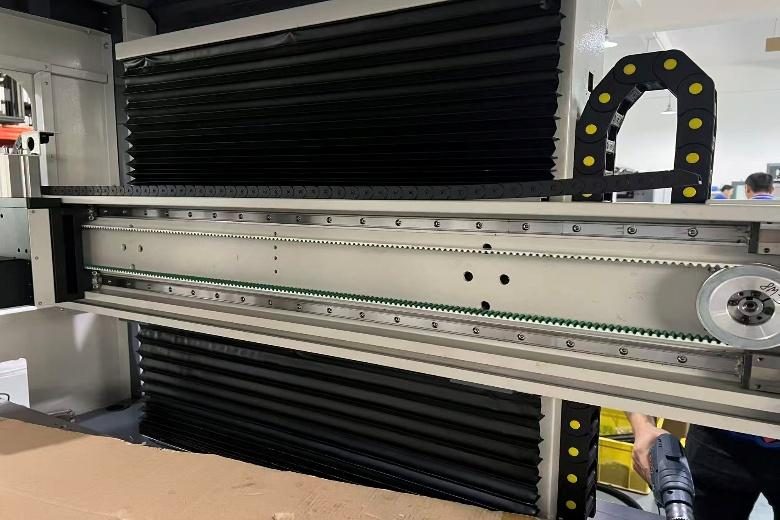
| Uneven ink deposit | Flat vacuum platen (±0.05 mm listed for the LC-6080SYJ-C); servo-driven squeegee on precision guides |
| Dust, fibres, pinholes | Static bars at every infeed and outfeed; dust removal before printing; hooded models available |
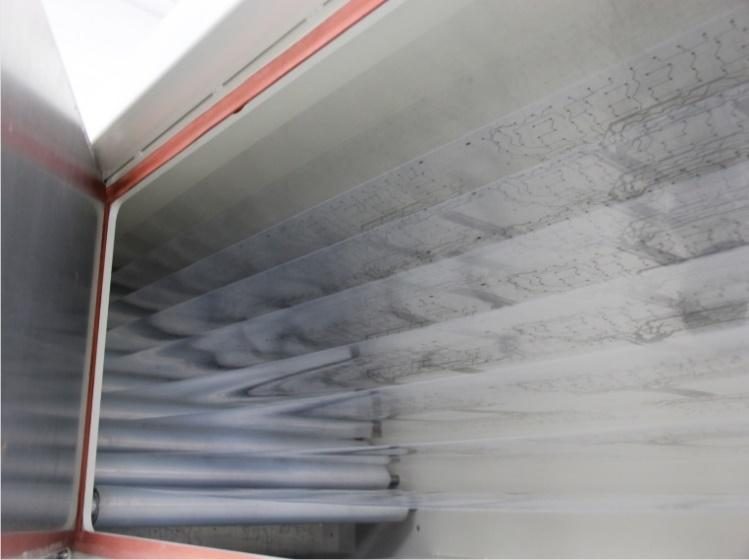
| Scratches and marks | Unwind that ramps from zero speed; sand-blasted, anodised dryer rollers; protective-film laminating at rewind |
| Dimensional change and drift | Constant dwell in the tunnel dryer; multi-zone PID temperature control |
| Under- or over-cure | Dwell = drying path ÷ web speed, set against the ink data sheet and verified by test |
What the machine cannot fix
- Ink and paste not matched to the film or cure — adhesion and resistance fail regardless of registration.
- Mesh and stencil chosen for the wrong deposit thickness.
- Unstable film: grades or lots that shrink differently.
- Artwork without registration marks or with tolerances tighter than film and process allow.
A yield trial worth running
- Print a full roll of the real product, not a few sheets.
- Sample start, middle and end; record defect type and position on the web.
- Keep settings fixed through the roll and log them.
- Calculate first-pass yield with the agreed definition; repeat on a second roll before deciding.
Frequently asked questions
What is a good first-pass yield in screen printing?
There is no universal number; it depends on product and tolerance. Compare lines with the same definition, product and roll length.
Does CCD alignment guarantee yield?
It removes registration errors within the correction range. It cannot fix film that changes size unevenly, wrong ink or poor stencils.
How is first-pass yield different from OEE?
First-pass yield is the quality factor. OEE also includes availability (stops) and performance (speed losses).
References and fact sources
- Overall equipment effectiveness — availability, performance, quality (Wikipedia, with ISO 22400 references)
- TeepTrak — OEE components and first pass yield (ISO 22400-2 good quantity)
- LICHAO LC-6080SYJ-C roll-to-roll CCD screen printer — specification
Original process guidance. Equipment parameters come from LICHAO specification sheets; verify process fit with your own materials and samples.
Send your film, drawing, layer structure and acceptance criteria. Mr. Yang can discuss a trial plan.
Contact us ↗